What to Expect When Hiring Residential Landscaping Services

A well-designed outdoor space can completely change how you use and enjoy your home. Whether you are starting with a patchy lawn, an awkward backyard, an ageing garden or a completely blank outdoor area, professional landscaping can help turn that space into something more practical, attractive and easier to maintain.
But if you have never worked with a landscaper before, you may be wondering what actually happens after you make that first enquiry.
Understanding what to expect when hiring Residential Landscaping Services can make the process much easier. From the initial consultation and design discussions to site preparation, construction and final planting, professional landscaping usually follows a structured process.
This guide explains what Australian homeowners can typically expect when engaging Residential Landscaping Services, helping you prepare for the project without turning this article into another generic landscaping sales page.
At a Glance
Hiring Residential Landscaping Services usually involves several stages:
- An initial discussion about your property, ideas and budget
- An assessment of the existing outdoor space
- Landscape planning or design
- Selection of plants, materials and features
- Site preparation and construction
- Installation of lawns, gardens and outdoor elements
- Final walkthrough and maintenance advice
Good communication is important throughout the process. Your landscaper should understand how you want to use the space, not simply how you want it to look.
And yes, mentioning that you want “something low maintenance” before someone plants a miniature rainforest is probably worthwhile.
Want to know what each stage actually involves? Keep reading.
1. The Initial Landscaping Consultation
Most Residential Landscaping Services begin with a conversation about what you want to achieve.
The landscaper may visit your property to assess the site and discuss your priorities. This is your opportunity to explain what is working, what is not working and how you would ideally like to use the outdoor area.
You might discuss:
- Entertaining areas
- Lawn space
- Garden beds
- Privacy
- Shade
- Drainage
- Retaining walls
- Pathways
- Outdoor lighting
- Irrigation
- Low-maintenance planting
- Areas for children or pets
Rather than simply saying, “I want a nice garden,” try explaining how you actually use the space.
For example, a backyard designed primarily for weekend entertaining will usually require a different layout from one designed for children, pets or keen gardeners.
Pro Tip: Before meeting your landscaper, save a few photos of outdoor spaces you like. They can help communicate your preferred style far more clearly than phrases such as “modern but natural, with a bit of tropical but not too tropical.”
2. Your Property Will Be Assessed
Once your objectives are understood, the existing property needs to be evaluated.
Professional Residential Landscaping Services should consider more than just the visual appearance of the yard. Factors such as sunlight, soil, drainage, existing vegetation and site access can influence what is realistically achievable.
A landscaper may assess:
- The slope of the land
- Existing drainage patterns
- Soil condition
- Sun and shade throughout the day
- Existing trees and plants
- Access for machinery and materials
- Fences and neighbouring properties
- Existing structures
- Potential irrigation requirements
These details help determine which plants, materials and design features are suitable for the property.
Australia’s climate also varies considerably between regions, so plant selection and landscape design should reflect local conditions rather than relying purely on appearance.
3. Landscape Design and Planning
Depending on the size and complexity of the project, the next stage may involve a formal landscape design or a simpler project plan.
The design helps bring the concept together before construction starts.
It may identify where different features will be positioned, including:
- Lawn areas
- Garden beds
- Paving
- Steps
- Retaining structures
- Screening plants
- Trees
- Irrigation
- Lighting
- Outdoor entertaining areas
This stage is also where practical decisions are made.
A beautiful garden is great, but if you need to spend every Saturday pruning, watering and negotiating with an aggressively enthusiastic hedge, it may not match your lifestyle.
Good landscaping balances appearance, functionality and maintenance.
4. Choosing Plants and Materials
Material and plant selections can have a major impact on both the appearance and long-term maintenance of your landscape.
Depending on the project, your landscaper may help you choose:
- Pavers
- Natural stone
- Timber
- Decorative gravel
- Mulch
- Turf
- Native plants
- Screening plants
- Feature trees
- Groundcovers
It is worth discussing how much maintenance you are realistically prepared to do.
Some homeowners genuinely enjoy spending hours gardening every weekend. Others would prefer their garden to survive occasional watering and enthusiastic admiration from the kitchen window.
Both approaches are perfectly reasonable. The design simply needs to reflect them.
Did You Know?
Selecting plants for the correct position can often reduce future maintenance.
A plant that suits the available sunlight, soil and space is generally easier to manage than one constantly struggling against unsuitable growing conditions.
5. Site Preparation Comes Before the Pretty Part
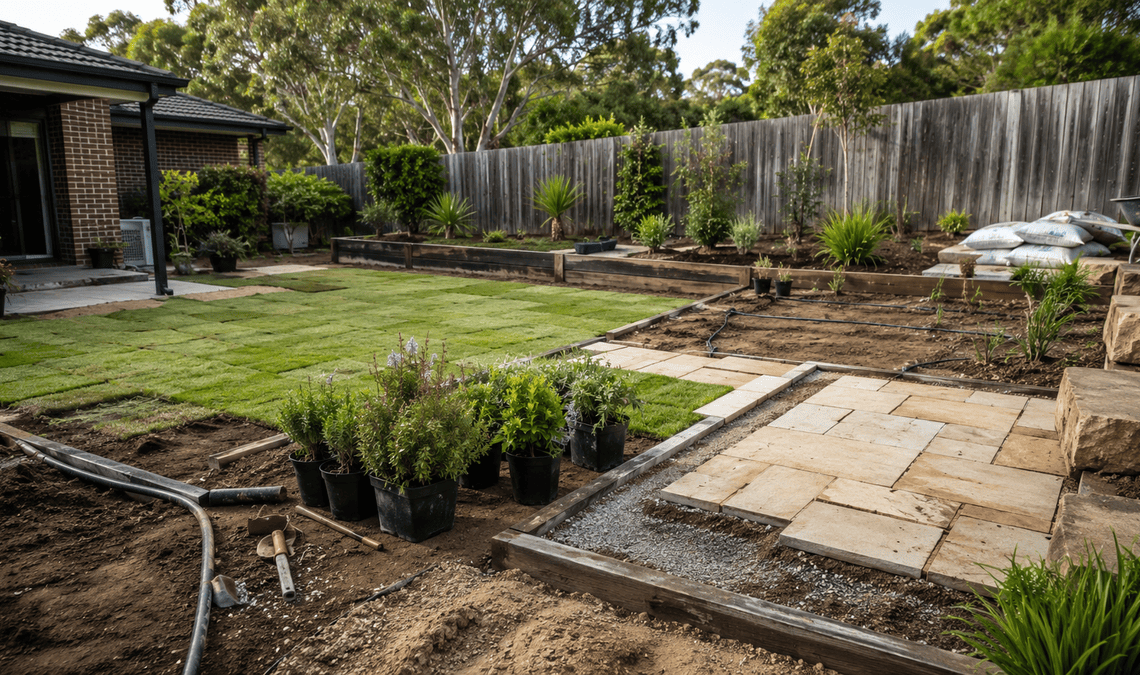
One thing homeowners are sometimes surprised by is how messy landscaping can look before it looks good.
Before new gardens, lawns or pathways appear, the existing site may need significant preparation.
This could involve:
- Removing old plants
- Clearing unwanted materials
- Excavation
- Levelling
- Improving soil
- Installing drainage
- Preparing garden beds
- Creating foundations for paving or structures
For several days, your backyard may look less like a landscaping magazine and more like a very organised excavation site.
That is usually part of the process.
Good preparation is important because many landscaping problems begin below the surface.
Quick Guide: Turning an Unused Backyard Into a Functional Space
Imagine a homeowner has a backyard with patchy lawn, limited shade and several garden beds that have become difficult to maintain.
The goal is not necessarily a spectacular resort-style transformation. They simply want an outdoor space they will actually use.
Common Challenges
- Is the lawn struggling or difficult to maintain?
- Are garden beds becoming overgrown?
- Does the yard lack comfortable areas for entertaining or relaxing?
How to Solve It
Define how the space will be used
Decide whether the priority is entertaining, gardening, family activities, pets or simply having an attractive place to relax.
Simplify the planting
Replace high-maintenance areas with carefully selected plants suited to the property’s conditions.
Create clear zones
Use garden beds, paving, lawn and pathways to establish practical areas without overcrowding the yard.
Plan maintenance from the beginning
Consider irrigation, mulch, plant growth and ongoing care before the landscaping is installed.
Why It Works
Instead of simply making the backyard look different, the landscaping solves practical problems that were preventing the homeowner from enjoying the space.
A successful project should make the outdoor area easier and more enjoyable to use over the long term.
6. Installation and Construction
Once preparation is complete, the transformation becomes more visible.
Depending on the scope of your Residential Landscaping Services, contractors may begin installing various features such as:
- Garden edging
- Paving
- Retaining elements
- Turf
- Irrigation
- Garden beds
- Trees and shrubs
- Decorative stone
- Mulch
- Outdoor lighting
Larger landscaping projects may take place in stages.
Weather, access and material availability can also influence project timing, so maintaining communication with your landscaper is important.
Quick Quiz: Are You Ready to Start Landscaping?
Answer yes or no to these questions:
- Do you know how you want to use your outdoor space?
- Have you identified the main problems with your current yard?
- Do you have a realistic project budget?
- Have you thought about how much garden maintenance you want?
- Do you have examples of landscaping styles you like?
Mostly yes? You are probably well prepared for an initial consultation.
Mostly no? That is completely normal. A landscaping consultation can help clarify those decisions before any major work begins.
7. The Final Walkthrough
When the landscaping work is finished, you should have an opportunity to review the completed project.
This is also a good time to ask about ongoing care.
Questions might include:
- How frequently should new plants be watered?
- When should lawns first be mowed?
- Does the irrigation system require adjustment?
- Which plants require pruning?
- How often should mulch be replaced?
- Are there any seasonal maintenance tasks?
Getting these answers early can help protect the investment you have made in the garden.
Frequently Asked Questions
How long do Residential Landscaping Services take?
The timeframe varies significantly depending on the project.
A straightforward garden refresh may be relatively quick, while landscaping involving paving, retaining walls, drainage, lawns and extensive planting can take considerably longer.
Your landscaper should provide an expected project sequence before work begins.
Should I have a budget before contacting a landscaper?
Having at least a general budget range is helpful.
It allows the landscaper to recommend realistic options and prevents time being spent designing features that may not suit the available budget.
You do not necessarily need an exact figure before the first consultation.
Can landscaping be completed in stages?
Yes. Larger residential landscaping projects can sometimes be divided into stages.
For example:
- Site preparation and drainage
- Structural landscaping
- Paving and lawns
- Planting and finishing details
Staging the project may help spread costs while still working towards a coordinated overall design.
Can Residential Landscaping Services create low-maintenance gardens?
Absolutely, although no garden is completely maintenance-free.
Low-maintenance landscaping can incorporate appropriate plant selection, mulch, irrigation, durable materials and simplified garden layouts to reduce ongoing work.
The important thing is to discuss your maintenance expectations during the planning stage.
Conclusion
Hiring Residential Landscaping Services is usually much more than choosing some plants and installing a new lawn. A professional landscaping project involves understanding how you want to use your outdoor space, assessing site conditions, developing a practical plan, preparing the property and installing the right combination of plants, materials and features.
Knowing what to expect makes it easier to communicate with your landscaper and make confident decisions throughout the project.
Ultimately, successful residential landscaping should do more than improve how your property looks. It should create an outdoor space that suits your lifestyle, works with your property and remains enjoyable long after the final plant goes into the ground.