When Are Arborist Reports Required for Development Applications?

Planning a new home, extension, subdivision, commercial project or other development can involve far more than drawings and building approvals. If trees are located on or near the site, they may also become part of the assessment process.
That is where Arborist Reports for development applications can become important.
Depending on the local council, planning controls, tree protection rules and the type of development proposed, an arborist report may be required to explain the condition, significance and likely impact on trees affected by the project.
For property owners, designers and developers, understanding when these reports may be needed can help avoid unnecessary redesigns, information requests and approval delays later in the process.
This article focuses specifically on when arborist reports may be required as part of a development application in Australia, rather than providing a general overview of arborist services.
At a Glance
Arborist Reports may be requested when:
- A development is located close to existing trees
- Protected or significant trees may be affected
- Excavation or construction could enter a tree protection area
- A council needs professional information about tree retention or removal
- A neighbouring tree may be affected by works
- A development application includes landscaping or tree-management requirements
- Council requests additional arboricultural information during assessment
Requirements vary between Australian councils, so there is no single rule that applies everywhere.
The safest approach is to identify potential tree constraints early rather than waiting for council to raise them later.
Want to understand the situations in more detail? Keep reading.
Why Would Council Ask for an Arborist Report?
Trees can influence a development in ways that are not immediately obvious from architectural drawings.
A mature tree may have roots extending beneath areas proposed for excavation. Construction traffic might pass through its root zone. New retaining walls, driveways, services or buildings may also change soil levels or growing conditions.
An Arborist Report gives the assessment authority technical information about issues such as:
- Tree species
- Tree dimensions
- Health and condition
- Structural characteristics
- Estimated retention value
- Tree protection requirements
- Likely construction impacts
- Whether proposed removal is justified
The purpose is generally not to make development impossible. It is to help planners understand whether trees can reasonably coexist with the proposed works.
And yes, sometimes a tree sitting quietly in the corner of the block can become one of the most discussed members of the entire project team.
When Are Arborist Reports Commonly Required?
There are several common situations in which arboricultural information may become part of a development application.
1. A Protected Tree Is Located on the Site
Many councils have planning controls or local tree-protection rules covering particular trees.
Protection may depend on factors such as:
- Height
- Trunk diameter
- Canopy spread
- Species
- Location
- Heritage or environmental significance
If your proposal involves removing, pruning or building close to a protected tree, council may require an Arborist Report before deciding whether the work is acceptable.
2. Construction Is Proposed Close to Existing Trees
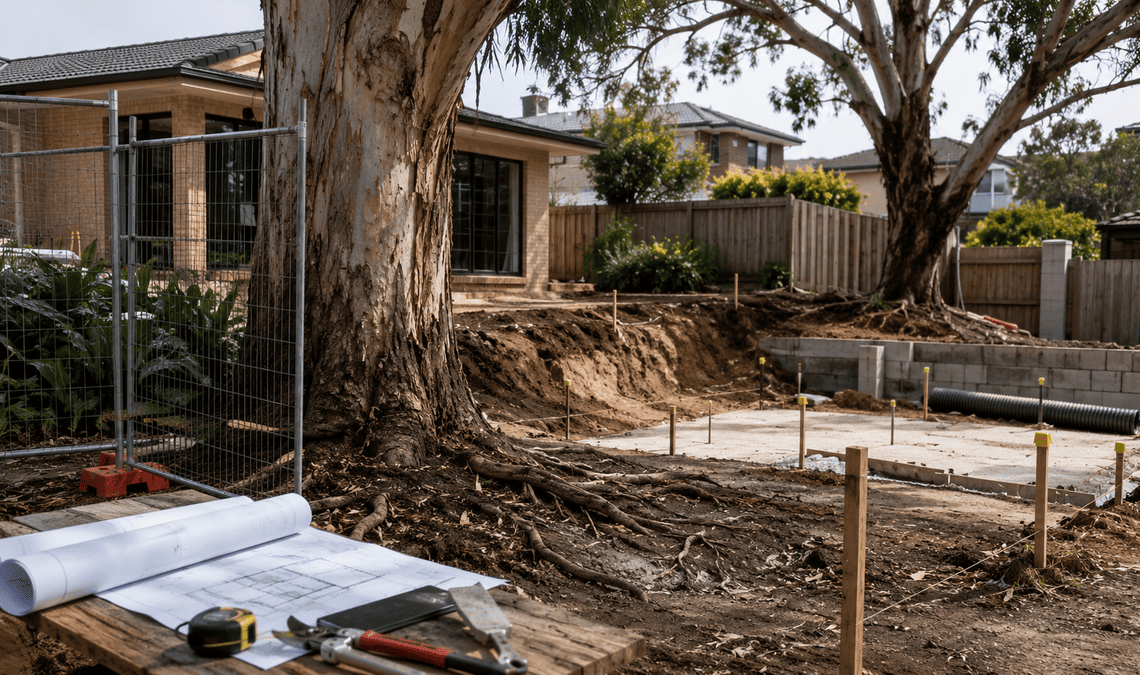
Even when a tree will remain, nearby construction can affect its roots.
Excavation for footings, pools, retaining walls, driveways, drainage or underground services can sometimes extend into areas important to tree stability and health.
An arborist may assess how close the works are to the tree and whether protection measures are needed.
Did You Know?
Tree roots are not usually confined neatly beneath the canopy. They can extend well beyond what appears obvious above ground.
3. A Tree Needs to Be Removed for Development
If a development requires tree removal, council may ask for supporting arboricultural justification.
An Arborist Report may document:
- The tree’s current condition
- Structural defects
- Expected useful life
- Landscape contribution
- Potential development conflicts
- Whether retention options have been considered
This allows the decision to be assessed using professional evidence rather than simply, “The tree is where the garage needs to go.”
4. Trees on Neighbouring Properties Could Be Affected
One commonly overlooked issue is neighbouring trees.
A tree does not need to be physically located on your property to influence your development.
If roots or canopy from a neighbouring tree extend toward the construction area, council may request information showing how the proposed works will avoid unacceptable impacts.
This can be particularly relevant for:
- Boundary excavations
- Basement construction
- Retaining walls
- New driveways
- Extensions close to side boundaries
Quick Guide: Your Plans Are Ready, but There Is a Large Tree Near the Building Footprint
Imagine you are preparing a development application and the architectural drawings are almost complete. A mature tree stands near the proposed building area, and nobody is certain whether it will create a planning issue.
Common Challenges
- Will council require the tree to be retained?
- Could excavation affect its roots?
- Should the design be changed before the application is submitted?
How to Approach It
Check local planning and tree controls early
Review the relevant council requirements before finalising the development layout.
Arrange an arboricultural assessment where appropriate
A qualified arborist can document the tree’s condition and likely development constraints.
Coordinate the arborist and designer
If tree protection influences the building footprint, identifying it early gives the design team more flexibility.
Document practical protection measures
Where a tree can be retained, the report may recommend fencing, restricted excavation zones or construction controls.
Why It Works
Addressing tree constraints before lodgement helps reduce surprises during assessment. It may also allow the design to respond to genuine arboricultural issues before changing the plans becomes expensive or inconvenient.
If trees are located close to your proposed works, early advice can make the development application process much easier to navigate.
What Might an Arborist Report Include?
The exact content depends on the purpose of the report and council requirements, but Arborist Reports prepared for development applications may include:
- Site and tree identification
- Species and dimensions
- Health and structural condition
- Photographs
- Tree retention recommendations
- Development impact assessment
- Tree protection zones
- Construction management recommendations
- Pruning or removal recommendations
- Replacement planting suggestions
Some projects may require more detailed documentation than others.
A simple residential extension involving one tree is very different from a multi-lot development containing numerous mature trees.
Should You Get the Arborist Report Before Lodging the DA?
In many situations, yes.
If tree impacts are reasonably predictable, obtaining the report early can help the architect, planner or designer understand the site’s constraints.
Waiting until council requests the information can create a sequence nobody particularly enjoys:
Council request → arborist inspection → revised design → amended drawings → more assessment time.
Obtaining the right information earlier may help shorten that chain.
Pro Tip
If the proposed building footprint, driveway, retaining wall or excavation is close to a substantial tree, consider investigating tree constraints during the design phase rather than treating them as a final approval issue.
Are Arborist Report Requirements the Same Across Australia?
No.
Tree controls are generally influenced by state planning frameworks and local government requirements, meaning the rules can differ significantly between councils.
For example, one council may regulate trees based on trunk diameter, while another may consider species, height, heritage value or location.
That is why searching only for a generic answer such as “Do I need an arborist report?” may not give you enough information.
You usually need to consider:
- The property location
- The council area
- Relevant planning controls
- The trees affected
- The type and scale of the development
Quick Quiz: Could Your Development Need an Arborist Report?
Answer Yes or No:
1. Is there a mature tree close to the proposed construction area?
2. Will excavation occur near a tree or boundary?
3. Are you proposing to remove a substantial tree?
4. Is there a large neighbouring tree close to the site?
5. Has council documentation mentioned tree protection or arboricultural assessment?
Your Result
0–1 Yes:
An Arborist Report may not be necessary, although local controls should still be checked.
2–3 Yes:
It would be sensible to investigate arboricultural requirements before lodging your application.
4–5 Yes:
Trees are likely to be a meaningful planning consideration, so early professional assessment may help avoid later complications.
Frequently Asked Questions
Can council request an Arborist Report after I lodge my application?
Yes. If the assessing officer determines that more information is needed about tree impacts, council may request additional arboricultural documentation.
Providing it later can extend assessment time, which is why foreseeable tree issues are often better investigated before lodgement.
Does an Arborist Report automatically mean a tree can be removed?
No.
An Arborist Report provides professional assessment and recommendations, but the final decision may rest with the relevant council or consent authority.
The report supports the decision-making process; it does not replace it.
Do small residential developments need Arborist Reports?
Sometimes.
Even a relatively small extension, pool or secondary dwelling can affect a protected or significant tree. The scale of the building is not always the deciding factor.
The location of the works in relation to the tree can be just as important.
What if the tree is healthy?
A healthy tree can still influence a development application.
Council may want information showing how it will be protected during construction, particularly where excavation, machinery or changes to ground levels are proposed nearby.
Can an arborist help before the architectural design is finished?
Yes, and in some cases this can be very useful.
Early arboricultural advice can identify which trees are suitable for retention and where significant constraints may exist, allowing the designer to consider those factors while the project is still flexible.
Conclusion
Arborist Reports may be required for development applications when proposed works could affect protected, significant or neighbouring trees. The exact requirement depends on the local council, the trees involved and the nature of the development.
For property owners and developers, the key is timing. Identifying tree constraints early can help designers respond appropriately, reduce unexpected council requests and create a clearer path through the approval process.
If substantial trees are located near a proposed building, driveway, excavation or boundary, checking arboricultural requirements before lodging the development application can be a practical and worthwhile step.