When Should You Book a Garage Door Service?

Your garage door is probably one of the largest moving parts of your home, yet it is easy to forget about it until something starts squeaking, shuddering or refusing to open at exactly the wrong moment.
For Australian homeowners, knowing when to book a Garage Door Service can help prevent inconvenient breakdowns, identify worn components early and keep the door operating safely and smoothly.
This article focuses specifically on the timing and warning signs that suggest a garage door should be professionally checked. Rather than simply explaining what garage door servicing involves, we will look at the situations where arranging a service makes practical sense.
At a Glance
You may want to book a Garage Door Service when:
- The door becomes unusually noisy.
- Movement is slower, uneven or jerky.
- The door does not open or close completely.
- Springs, cables or rollers appear worn.
- The door has not been serviced for a long time.
- The garage door reverses unexpectedly.
- The door feels unusually heavy when operated manually.
- You have recently moved into a property and do not know its maintenance history.
Regular servicing can also help identify smaller mechanical problems before they become larger repair jobs.
Want to know which warning signs deserve attention first? Keep reading.
1. Your Garage Door Has Become Much Noisier
Garage doors are mechanical systems, so some noise is normal. However, a sudden increase in grinding, scraping, squealing or rattling is worth investigating.
Different sounds can point to different issues.
For example:
- Squeaking may indicate components requiring lubrication.
- Grinding can suggest worn rollers or moving parts.
- Rattling may come from loose hardware.
- Scraping could indicate alignment problems.
A garage door should not sound like it is auditioning for a role in a horror movie every time you leave for work.
If the noise is noticeably different from normal operation, arranging a professional Garage Door Service can help determine the cause.
2. The Door Is Moving Slowly or Unevenly
Most homeowners become familiar with how quickly their garage door normally opens and closes.
If it suddenly becomes slower, hesitates during operation or appears to move unevenly, something may require attention.
Possible causes include:
- Worn rollers
- Track issues
- Incorrect spring tension
- Motor problems
- Damaged hinges
- General wear across moving components
An unevenly moving door should not simply be ignored, particularly if one side appears to rise or fall faster than the other.
Pro Tip: Pay attention to changes rather than waiting for complete failure. A garage door that behaves differently from last month may be giving you an early warning.
3. The Garage Door Does Not Close Properly
A garage door that stops halfway, reverses unexpectedly or refuses to close completely may have several potential causes.
Sometimes the problem is relatively straightforward, such as an obstruction around the safety sensors. In other cases, the issue may involve the opener, tracks, springs or other mechanical components.
Before arranging servicing, homeowners can safely check whether:
- Something is blocking the doorway.
- The safety sensor area is dirty or obstructed.
- The remote control batteries need replacing.
If the problem continues, professional assessment is usually the sensible next step.
Avoid repeatedly forcing the door to operate, as doing so may place additional strain on the system.
4. It Has Been a Long Time Since the Last Service
Garage doors are used frequently.
For some Australian households, the garage is effectively the main entrance to the home. That can mean hundreds or even thousands of opening and closing cycles over time.
Even when everything appears to work normally, components gradually experience wear.
A routine Garage Door Service may include checks of parts such as:
- Springs
- Cables
- Rollers
- Hinges
- Tracks
- Fasteners
- Safety mechanisms
- Garage door opener operation
There is no single servicing interval that suits every garage door because frequency of use, door type, age and environmental conditions all vary.
Checking the manufacturer’s servicing recommendations is a good starting point.
5. The Door Feels Heavy When Operated Manually
Garage door springs help counterbalance the weight of the door.
If the door suddenly feels significantly heavier than expected when disconnected from the automatic opener, there could be an issue with the spring system or another component.
This deserves professional attention.
Garage door springs and cables can be under substantial tension and should not be treated as DIY repair projects.
Important: Visual observation is one thing. Attempting to adjust, remove or replace high-tension components is another. Leave those tasks to appropriately experienced technicians.
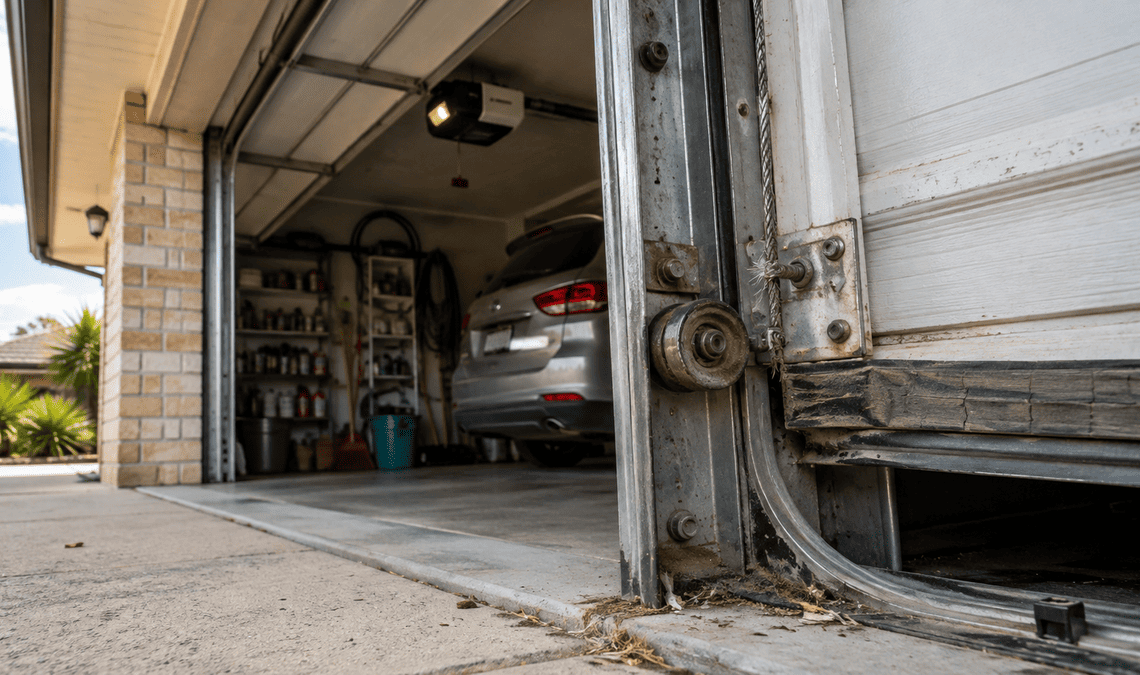
6. You Notice Visible Wear or Damage
You do not need to be a garage door technician to notice that something looks wrong.
While standing at a safe distance, you may notice:
- Frayed cables
- Damaged rollers
- Bent tracks
- Loose hinges
- Rusted components
- Sagging door sections
- Unusual gaps
- Cracked weather seals
Visible wear does not necessarily mean the entire garage door needs replacing. In many cases, individual components may simply need attention.
However, damaged components should be assessed before they contribute to additional mechanical problems.
Quick Guide: Your Garage Door Still Works, But Something Feels Wrong
Imagine your garage door is still opening every morning, but it has become louder and occasionally hesitates halfway.
You might be wondering whether to wait until it completely stops working or organise an inspection now.
Common Questions Homeowners Ask
- Is a new rattling noise something I can ignore?
- Should the door shake slightly while opening?
- Can I keep using the door if it still eventually closes?
A Practical Approach
Observe the change
Think about what is different from normal operation. Noise, speed and movement patterns can provide useful clues.
Check simple external causes
Look for visible obstacles, debris around tracks or blocked safety sensors without dismantling anything.
Avoid high-tension components
Do not attempt to adjust springs or cables yourself.
Arrange professional servicing if the problem continues
A technician can inspect the system and determine whether adjustment, maintenance or repair is appropriate.
Why This Approach Works
Garage door problems often become easier to manage when they are investigated early.
Instead of waiting until the vehicle is trapped inside the garage on Monday morning, dealing with unusual behaviour beforehand can reduce inconvenience and potentially prevent further component wear.
After Moving Into a New Home
Buying a property means inheriting its garage door as well as the kitchen, bathroom and questionable paint colour someone chose for the spare bedroom.
Unfortunately, maintenance records for garage doors are not always available.
If you have recently purchased a home and have no idea when the garage door was last checked, arranging a Garage Door Service can provide a useful baseline.
The technician can assess the door’s general condition and highlight components that may require future attention.
What About Coastal Australian Conditions?
Environmental conditions can influence garage door components.
Homes in coastal areas may experience greater exposure to:
- Salt-laden air
- Humidity
- Moisture
- Corrosion
Dust, heat and changing weather conditions can also affect moving components over time.
This does not mean coastal homeowners need to panic every time they see a speck of rust. It simply makes routine observation and maintenance particularly worthwhile.
Quick Quiz: Is It Time to Book a Garage Door Service?
Answer yes or no:
- Has your garage door become noticeably louder recently?
- Does it sometimes hesitate, shake or move unevenly?
- Has it been a long time since anyone inspected it?
- Does the door reverse or stop unexpectedly?
- Can you see worn, rusty or damaged components?
- Does the door feel unusually heavy?
- Are you unsure about the maintenance history?
Your Result
0–1 Yes:
Your garage door may simply need continued observation and routine maintenance.
2–3 Yes:
It may be worth arranging a professional inspection before the symptoms become more noticeable.
4+ Yes:
Booking a Garage Door Service sooner rather than later would be a sensible precaution.
This quiz is only a general guide and cannot diagnose mechanical faults.
FAQs About Garage Door Service
Can I service my garage door myself?
Homeowners can usually perform basic tasks such as keeping the area clean, checking for visible obstructions and following manufacturer-approved maintenance instructions.
However, springs, cables and other tensioned components should generally be left to professionals because incorrect handling can be dangerous.
Should I wait until my garage door stops working?
Usually, no.
Waiting for complete failure can turn a relatively manageable issue into a very inconvenient one. Changes in noise, movement or reliability can provide useful early warnings.
Does a noisy garage door always mean something is broken?
Not necessarily.
Some noises may simply indicate lubrication or minor adjustment is required. However, new grinding, scraping or persistent rattling deserves investigation, particularly when accompanied by uneven movement.
Should an automatic garage door’s safety system be checked?
Yes. Safety mechanisms are an important part of automatic garage door operation.
A professional service can include checks to confirm that relevant safety features are functioning correctly according to the door and opener system.
Is servicing worthwhile for an older garage door?
It can be particularly useful.
Older doors may have experienced many years of movement, weather exposure and component wear. Servicing can help identify whether parts require maintenance, adjustment or replacement.
Conclusion
Knowing when to book a Garage Door Service is largely about recognising changes before they become complete failures. Increasing noise, slow or uneven movement, unexpected reversing, visible wear and an unknown maintenance history are all sensible reasons to arrange professional attention.
Routine servicing can also help homeowners understand the condition of components that are difficult to assess without experience.
The key is simple: your garage door does not need to completely stop working before it deserves attention. If its behaviour has noticeably changed, arranging an inspection sooner can help keep it operating safely, smoothly and reliably.