Construction in Australia 2025: What’s Changing on Site and Beyond

From Melbourne’s skyline to the suburbs of Brisbane, construction in Australia is going through one of the biggest transformations in decades.
In 2025, it’s not just about concrete and cranes anymore — it’s about sustainability, smart materials, technology, and compliance. Whether you’re a tradie, developer, architect, or homeowner planning a build, staying ahead of these shifts isn’t optional — it’s essential.
This guide unpacks everything shaping the Australian construction industry in 2025: trends, tools, regulations, and the growing role of green design and innovation.
Quick Overview: Snapshot Summary
At a Glance
- Construction in Australia 2025 is driven by sustainability, digitisation, and skilled labour demand.
- The National Construction Code (NCC 2025) brings new compliance standards for energy efficiency and safety.
- AI, modular housing, and smart materials are transforming project delivery.
- Government infrastructure spending continues to fuel growth across states.
Let’s dig into what’s really building the future of Australian construction.
1. The State of Construction in Australia (2025 Overview)
Australia’s $150-billion construction industry is booming — but evolving fast.
Key Trends
- Sustainability first: Builders are choosing greener materials and low-carbon methods.
- Digital workflows: BIM (Building Information Modelling) and AI-driven design tools are now standard.
- Labour shortages: Ongoing demand for skilled workers in trades and engineering.
- Prefabrication: Modular homes and off-site construction continue to rise.
Did You Know?
The construction sector contributes about 8 % of Australia’s GDP and employs more than 1.2 million people (source: ABS 2025).
Pro Tip Box
Builders who adopt digital design tools and automated compliance systems report faster approvals and fewer on-site errors.
2. Sustainability: Building Greener, Smarter, Cleaner
The 2025 buzzword? Sustainability — not just as a concept, but as a compliance requirement.
What’s Changing
- New NCC 2025 Standards demand higher thermal performance and lower emissions.
- Builders must meet 7-Star NatHERS energy ratings for new homes.
- Recycled materials such as green concrete and reclaimed timber are mainstream.
- On-site solar systems and smart battery storage are now built-in, not optional.
Pro Tip Box
Sustainable homes often cut utility bills by 40 % — a win for both the planet and your wallet.
Did You Know?
The government’s “Net Zero 2050” policy is directly shaping construction rules and incentives for eco-friendly builds.
3. Smart Construction Technologies: The Digital Worksite
From drones to digital twins, technology is reshaping the way Australians build.
Key Innovations
- AI-powered project management predicts delays and budget overruns.
- 3D printing enables faster prototyping of building components.
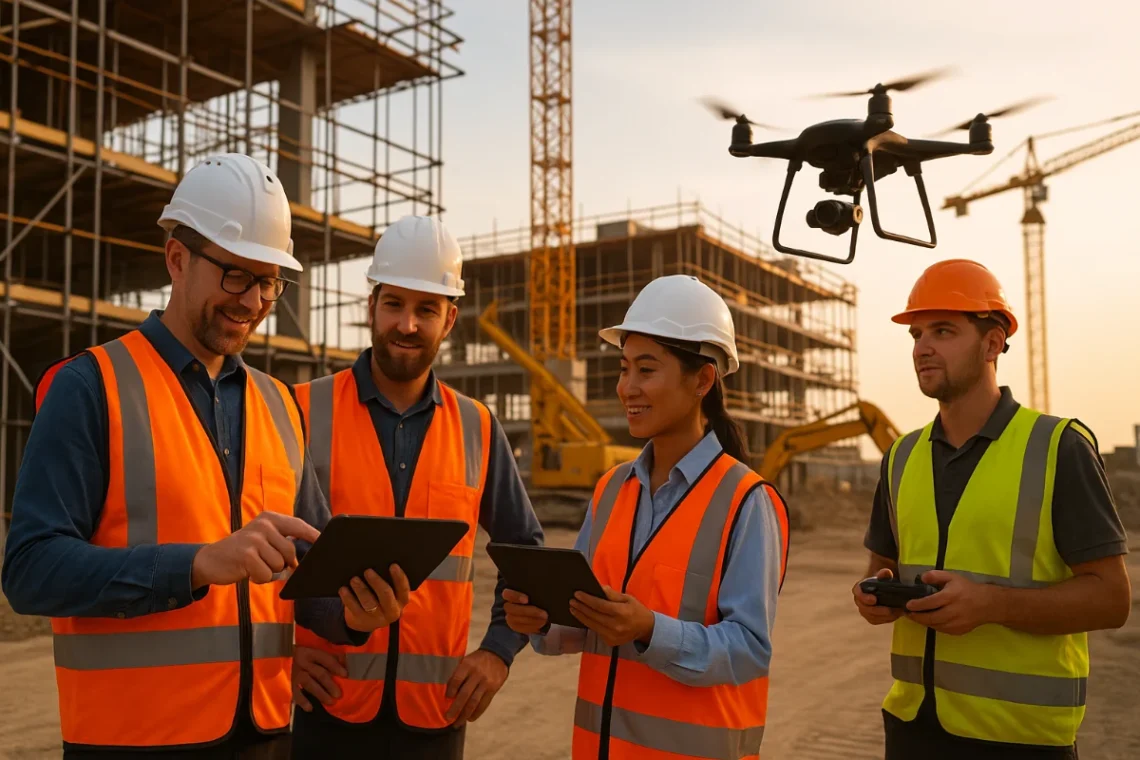
- Drones improve site safety and surveying accuracy.
- Digital twins simulate entire buildings before breaking ground.
Pro Tip Box
A digital twin can reduce design errors by up to 30 %, saving thousands in rework costs.
Did You Know?
Australia is now a leader in 3D-printed housing — with homes printed in under 24 hours using sustainable concrete blends.
4. Modern Building Materials and Methods
Gone are the days when “brick and mortar” were the only options.
Top Materials in 2025
| Material | Why It Matters |
|---|---|
| Cross-Laminated Timber (CLT) | Renewable, lightweight, and reduces CO₂ emissions. |
| Green Concrete | Made from recycled waste — 40 % lower carbon output. |
| Smart Glass | Adjusts tint based on temperature and sunlight. |
| Steel Alternatives | Bamboo composites and recycled metals gaining traction. |
Pro Tip Box
The rise of modular and prefabricated homes means faster builds and 20–30 % lower waste rates.
5. The Rise of Modular and Prefab Construction
Australians love speed — and modular building delivers it.
Why It’s Booming
- Off-site manufacturing cuts weather delays.
- Labour shortages make modular builds more efficient.
- Eco-friendly and customisable — no cookie-cutter results.
- Perfect for housing projects in remote or high-growth areas.
Did You Know?
Modular housing now accounts for 12 % of new home builds in Australia, a record high (source: HIA 2025).
Pro Tip Box
Modular doesn’t mean cheap — top architects now design luxury modular homes for premium clients.
6. Compliance & Regulation: Navigating NCC 2025
The National Construction Code 2025 introduces some of the most significant updates in years.
Key Changes
- Higher energy-efficiency requirements (minimum 7 Stars).
- Updated disability-access and safety standards.
- Mandatory condensation and ventilation performance testing.
- Digital certification systems for faster building approvals.
Pro Tip Box
Builders should always verify local council overlays (VPO, BMO, ESO) before design finalisation to avoid costly redesigns.
Did You Know?
Non-compliance fines for building code breaches increased by 25 % in 2025 — precision now pays.
7. Infrastructure Boom: Public Projects Driving Growth
Government spending is fuelling record infrastructure growth.
Major Areas of Investment
- Roads and rail (Melbourne Suburban Rail Loop, NSW Metro).
- Renewable-energy infrastructure.
- Public housing and urban regeneration.
- Smart-city developments across capital regions.
Did You Know?
More than $120 billion is allocated for major infrastructure works between 2025–2029.
Pro Tip Box
Skilled tradies in infrastructure and green energy construction are among Australia’s most in-demand professions.
Quick Guide: Future-Proofing Your Construction Business
Common Challenges
- Tight labour market.
- Rising material costs.
- Stricter sustainability standards.
How to Solve It
- Invest in digital project-management systems.
- Train teams on new NCC 2025 compliance.
- Diversify suppliers to manage cost volatility.
- Partner with sustainable-tech providers.
- Upskill workers in green construction methods.
Why It Works
Tech-ready, regulation-aware builders deliver faster, safer, and more profitable projects.
Interactive Quiz: How Future-Ready Is Your Construction Business?
| Question | A) Yes | B) Sometimes | C) Not Yet |
|---|---|---|---|
| 1. We use digital tools for project management. | 3 | 2 | 1 |
| 2. We meet or exceed NCC 2025 sustainability standards. | 3 | 2 | 1 |
| 3. We use recycled or green materials regularly. | 3 | 2 | 1 |
| 4. Our team receives ongoing compliance training. | 3 | 2 | 1 |
| 5. We integrate AI or automation into workflows. | 3 | 2 | 1 |
Results
- 13–15: Smart Builder — you’re leading the industry.
- 9–12: Modern Contractor — solid foundation, keep innovating.
- ≤ 8: Traditionalist — time to modernise your toolkit.
FAQs
Q1: What’s the biggest change in construction for 2025?
→ Sustainability and digitisation — builders must now meet stricter energy and carbon-reduction targets.
Q2: Is modular housing the future of building in Australia?
→ It’s a major trend, especially for speed, cost-control, and sustainability.
Q3: How can small builders stay competitive?
→ Invest in AI-powered estimating tools, sustainable materials, and ongoing training.
Q4: Will construction costs drop in 2025?
→ Not significantly — but better project efficiency can offset price pressures.
Q5: Which Australian states are leading in innovation?
→ Victoria and NSW lead in regulation and green building adoption.
Conclusion
Construction in Australia 2025 is smarter, greener, and more connected than ever.
Between sustainability mandates, digital innovation, and workforce evolution, the builders who adapt early will lead tomorrow’s skyline.
So whether you’re laying bricks or managing billion-dollar infrastructure, the message is clear — the future of building in Australia has already begun.
Disclaimer
This article provides general information only and does not constitute professional, legal, or financial advice. Always consult qualified industry experts and local authorities for project-specific requirements.